
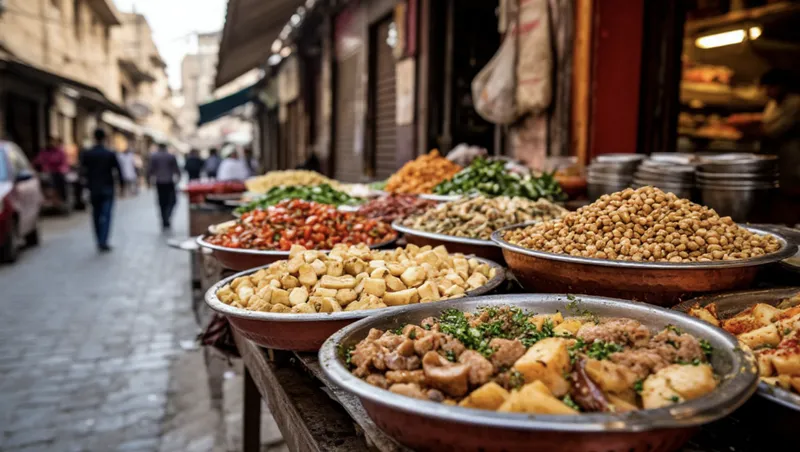
Syrian cuisine is one of the most ancient and richest cuisines in the Levant region. The gastronomic heritage of historical cities like Aleppo and Damascus forms the foundation of the cuisine. The cuisine skillfully blends the freshness of the Mediterranean with spices arriving from the Silk Road.
In this article, we examine the most satisfying main dish of the Syrian table, the warm dessert that reflects the country’s rich past, and the practical delicacy that is an essential item of street bakeries.
Here is Syria’s gourmet trio: Fatteh, Mamounia, and Manakish.
1. The Authentic Table of the Main Dish: Fatteh

Fatteh (Chickpea Yogurt Bread) is one of the most beloved and original dishes of Syrian cuisine. Especially around Damascus, it is consumed as a main course for breakfast or lunch due to its satisfying nature. The word literally means “crumb.”
- What is it? A layered dish prepared with pieces of fried or baked pita bread on the bottom layer, boiled chickpeas in the middle layer, and a yogurt sauce with garlic/tahini and spiced melted butter on top.
- How is it Eaten? Served hot, with pine nuts and parsley added on top. It is essential that the sauce softens and flavors the bread underneath.
- Why a Main Dish? The satisfying nature of the bread and chickpeas, combined with the richness of the yogurt and butter, makes Fatteh a main course with a gravitas similar to Kibbeh, yet unique to Syria in its visual and structural form.
2. The Warm Equivalent of Desserts: Mamounia
(Mamounia (Warm Semolina Halva) image to be inserted here)
Mamounia is a simple yet richly flavored warm dessert, particularly consumed in Syria during the winter months and for breakfast. It has a more regional and distinct profile compared to cold custards.
- What is it? A type of semolina halva fundamentally made from plain semolina, butter, water, and sugar, and flavored with rose or orange blossom water.
- How is it Eaten? Served hot. It is always topped with cinnamon, nuts, or pistachio, along with thick Ishteh (clotted cream/cream cheese).
- History: It is believed to be named after the Abbasid Caliph Al-Ma’moun and represents the deep-rooted dessert tradition of Syrian cuisine.
3. The Crispiness of the Streets: Manakish (Thyme or Cheese Flatbread)

Manakish (Manakish) is the most consumed fast baked food in the country, with its most delicious examples found in Syrian bakeries.
- What is it? A flatbread or pizza-like food item prepared by topping round, thin dough with a mixture of thyme and olive oil (Za’atar), cheese (akawi or halloumi), or minced meat, and quickly baking it in a stone oven.
- How is it Eaten? Usually eaten hot, folded or rolled, as a breakfast item or a lunch snack.
- The Flavor Experience: Especially Manakish with Za’atar represents the scent of the Syrian streets and is a practical, satisfying option.
Leave a Comment