
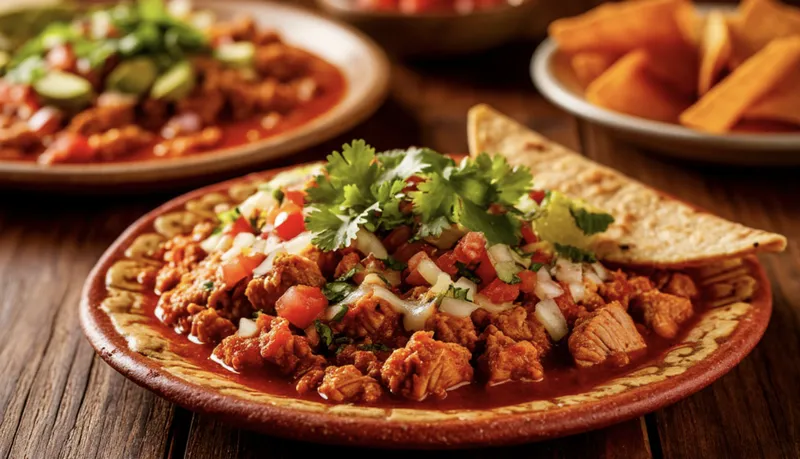
Mexican cuisine has a history spanning hundreds of years; it was born from the blending of Maya and Aztec traditions with Spanish influences. Corn, beans, and chili pepper (chile) are the holy trinity of this cuisine. Vibrant colors, fresh herbs, and rich sauces (salsa) are the signature of Mexican gastronomy.
In this article, we examine the sweetest tradition of the dinner table, the country’s general and most common main course/snack, and the undisputed king of street food.
Here is Mexico’s gourmet trio: Tres Leches Cake, Taco, and Tacos al Pastor.
1. General Representative of the Main Dish: The Taco
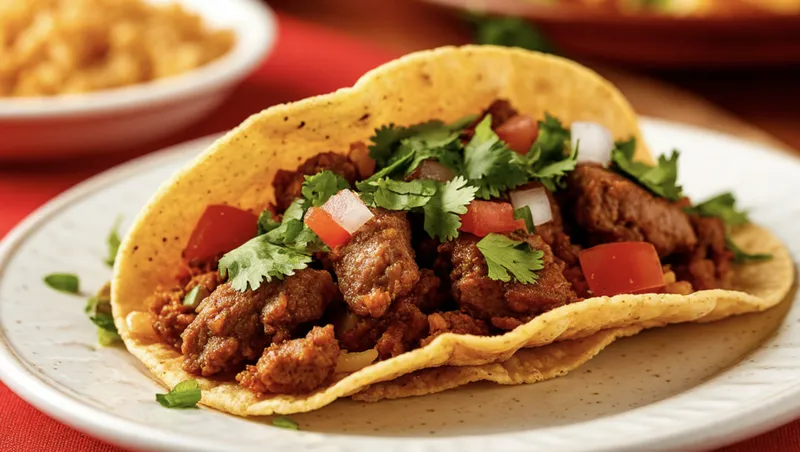
The Taco is the backbone of Mexican cuisine and represents a way of eating more than just a dish. The Taco can be thought of as the bread of Mexico; it can become a main course with whatever filling is placed inside.
- What is it? It is a practical food item obtained by placing any filling (usually beef, chicken, fish, or vegetables) inside a small, soft tortilla made from corn flour.
- How is it Eaten? It is typically eaten by hand, folded or rolled. Lime juice is squeezed over it, and salsa (spicy sauce), onions, and cilantro (cilantro) are added.
- Why a Main Dish? In Mexico, the richness and variety of the filling inside the Taco (e.g., Tacos de Barbacoa or Tacos de Guisado) makes it a complete meal and places it at the center of the table.
2. Queen of Desserts: Tres Leches Cake
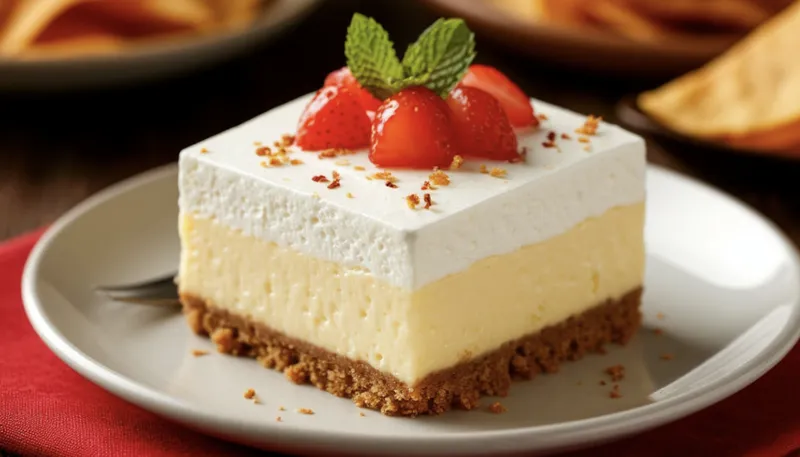
The Tres Leches Cake (Three Milk Cake), as its name suggests, is a light, moist, and refreshing cake made from a combination of three different types of milk. It is indispensable for celebrations and special occasions in Mexico.
- What is it? It is made by cooling a soft sponge cake (pandispanya in Turkish, here translated as sponge cake) after baking, and then slowly pouring a mixture of condensed milk, evaporated milk, and cream (or whole milk) over it until completely absorbed.
- The Trick: The cake base must never be dry; it needs to absorb the three different milk mixtures optimally. It is usually topped with whipped cream.
- History: Although its origin is not strictly Mexico (it is thought to have spread from Central America), it has become a national dessert in Mexico, and its most popular versions have been developed here.
3. Icon of the Streets: Tacos al Pastor
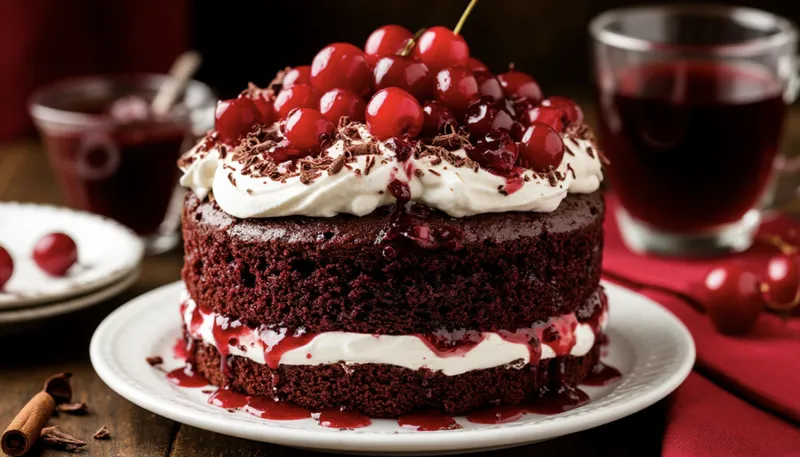
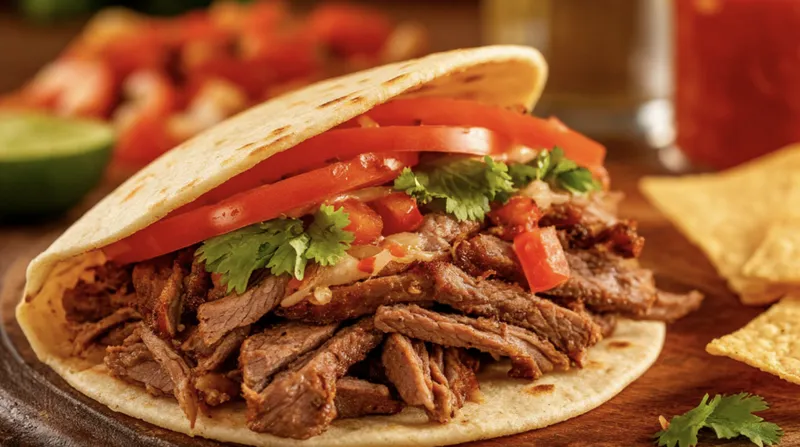
When you walk the streets of Mexico City (CDMX) and see massive meat spits resembling döner rotisseries, you have stumbled upon Tacos al Pastor. This is the greatest cultural blend of street food culture.
- What is it? Pork meat is marinated with achiote (seed), chili, and spices, and then slow-cooked on a vertical spit (trompo), just like Turkish döner or Lebanese shawarma.
- Cultural Origin: It was created inspired by the shawarma technique brought by Lebanese immigrants who arrived in Mexico in the 1930s. However, it was Mexicanized by using pork instead of lamb, and chili peppers and pineapple instead of Middle Eastern spices.
- The Flavor Experience: The meat is thinly sliced and placed on small tortillas. The chef’s final touch is to slice a piece of fresh pineapple from the top of the spit, letting it fall onto the taco.
Leave a Comment