
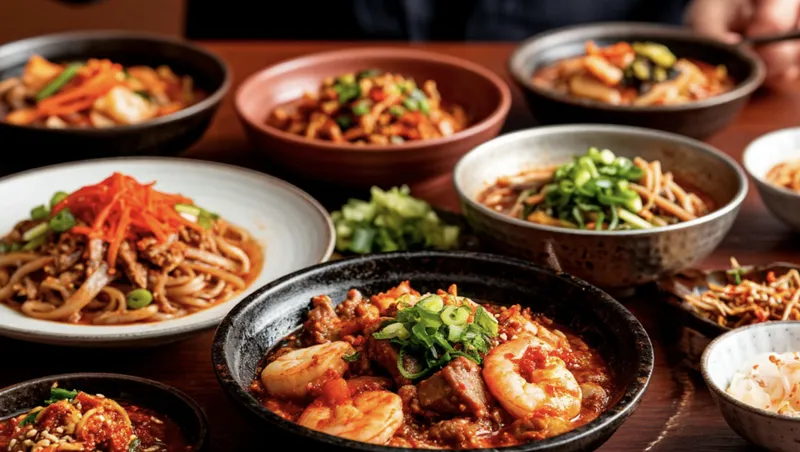
South Korean cuisine (Hansik) is based on the harmony of rice, vegetables, and meat. Its most important characteristics are the fermented side dishes (Banchan) served with almost every meal, and Kimchi, the pillar of the cuisine. Korean food is known for its masterful balance of sweet, sour, spicy, and salty flavors.
In this article, we examine the indisputable staple of the Korean table, the traditional dessert, and the hottest, most popular fast food delicacy of the streets.
Here is South Korea’s gourmet trio: Kimchi, Tteok, and Tteokbokki.
1. The Cornerstone of the Main Dish: Kimchi
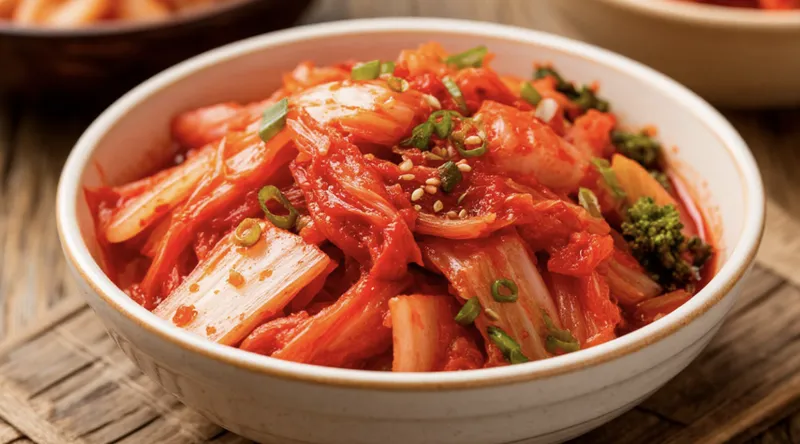
Kimchi is the soul of South Korea; it is not just a side dish but a national identity and a fundamental component of the daily diet. For Koreans, Kimchi is what bread is to others.
- What is it? A spicy, sour side dish typically prepared by fermenting Chinese cabbage, turnip, cucumber, or other vegetables with spicy red chili powder (Gochugaru), garlic, ginger, and fish sauce.
- How is it Eaten? It is eaten alongside rice at almost every meal. It is also a core ingredient in many main dishes like Kimchi Jjigae (Kimchi stew) or Kimchi Bokkeumbap (Kimchi fried rice).
- Why a Staple? Due to its preparation in large quantities annually and its presence at every meal, it is considered the undisputed main element of Korean cuisine (the queen of Banchan).
2. The Tradition of Sweets: Tteok (Rice Cake)
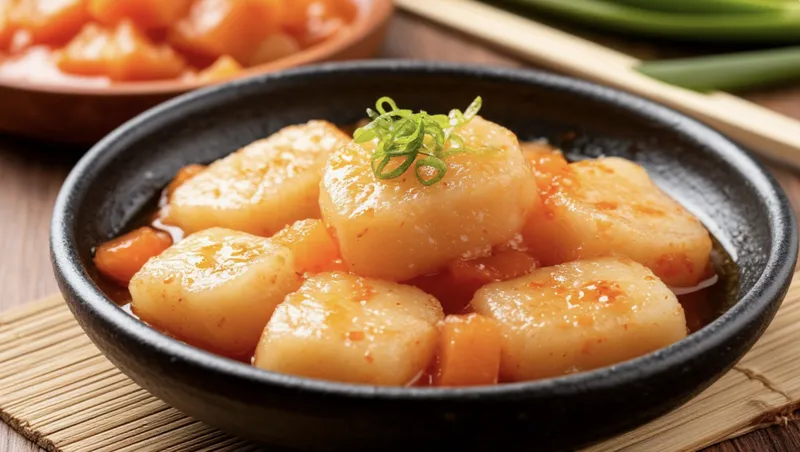
Tteok (Rice Cake) is indispensable for Koreans on important days, holidays, and festivals. This dough-based food, which can be eaten sweet or savory, is like the Korean version of Japan’s Mochi.
- What is it? Dough products made with glutinous rice flour (chapssal) or regular rice flour (ssal), which are steamed, pounded, kneaded, and shaped in various forms.
- Varieties: There are hundreds of varieties, such as Injeolmi (coated with roasted soybean powder), Songpyeon (eaten during the Mid-Autumn Festival, cooked over pine needles, shaped like a half-moon), and Jeolpyeon (Patterned Tteok).
- The Trick: The sweet versions are served at the end of the meal, usually with tea, and represent Korea’s dough-based confectionery tradition.
3. The Heart of the Streets: Tteokbokki (Spicy Rice Cake)
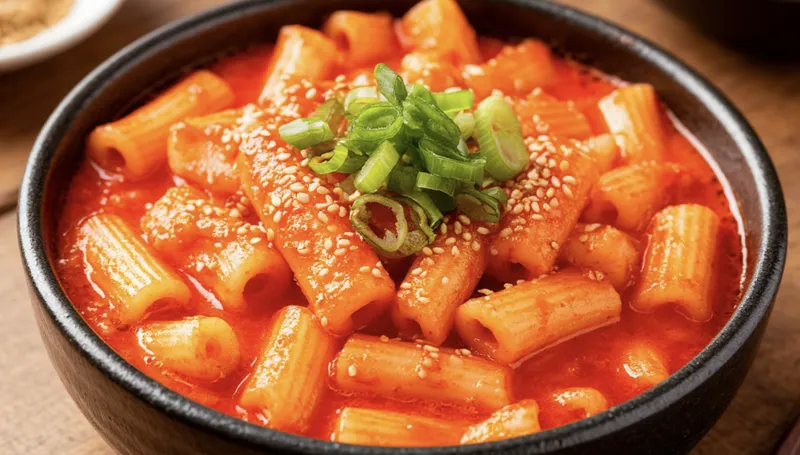
Tteokbokki is an absolute must-have, especially in the street food markets (pojangmacha) of Seoul. It is the fast food that best reflects Korea’s spicy and comforting food culture.
- What is it? It is prepared by simmering stick-shaped rice cakes (garaetteok) in a thick, sweet and spicy sauce based on Gochujang (hot pepper paste), usually along with fish cake (eomuk) and boiled egg.
- How is it Consumed? Served hot and eaten with chopsticks. Being filling, inexpensive, and fast makes it very popular among students and young people.
- The Flavor Experience: The perfect balance of sweet, salty, and intense heat makes Tteokbokki the modern and dynamic symbol of Korean street food culture.
Leave a Comment