
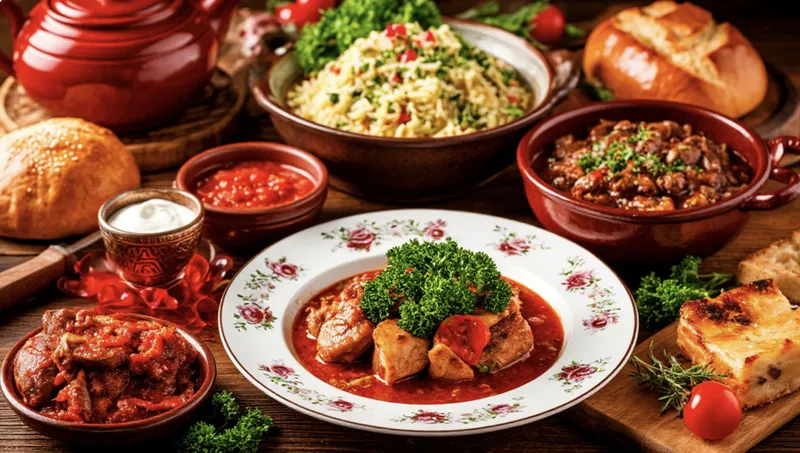
Russian cuisine is famous for its heavy and satisfying dishes, designed to withstand harsh winters. This cuisine, rooted in peasant traditions, was later blended with the richness of Tsarist-era dining culture, and is enriched with soups, pastries, and fermented products.
In this article, we examine the undisputed main course (and queen of soups) of the Russian table, the country’s most beloved layered dessert, and the practical dough-based food of the streets or homes.
Here is Russia’s gourmet trio: Borscht Soup, Medovik, and Blini.
1. The Queen of the Main Dish: Borscht Soup

Borscht Soup (Borscht), though originally Ukrainian, has become a national dish in Russia and the gastronomic symbol of Eastern Europe. This soup, which gets its red color from beets, takes on a role as hearty as a main course in Russian cuisine.
- What is it? A rich soup prepared by boiling root vegetables, primarily beets, along with cabbage, carrots, potatoes, onions, and sometimes meat (beef or pork) for a long time, resulting in a slightly sour-sweet taste.
- How is it Eaten? It is typically served hot, with Smetana (sour cream) and freshly chopped dill. It is accompanied by rye bread or garlic pampushky (small fried breads).
- Why a Main Dish? Its dense vegetable and meat content is enough to make it a meal on its own and serves as an excellent shield against the winter cold.
2. The Legend of Desserts: Medovik

Medovik (Honey Cake), derived from the Russian word med, meaning “honey,” is the most popular layered cake in Russia and its surrounding countries.
- What is it? A cold-served cake prepared by layering very thin, caramelized, honey-rich cake slices with cream (either smetana-based sour cream or buttercream).
- The Trick: The cake must be refrigerated for at least 12 hours after assembly. During this process, the cream softens the stiff honey layers, giving the cake a “melting” texture.
- History: According to legend, this cake was secretly made in the 19th century by a chef for Empress Elizabeth, the wife of Emperor Alexander I, who disliked honey. The Empress was so fond of it that the cake became famous.
3. The Practicality of the Streets and Homes: Blini (Russian Crêpes)

Blini (Russian Crêpes) are one of the fundamental dough-based foods in Russian cuisine and are indispensable for both celebrations and daily snacks.
- What is it? Thin, round crêpes, thicker than French crêpes and thinner than American pancakes, usually made from yeast batter. They are also traditionally made using buckwheat flour.
- How is it Eaten? It can be consumed both sweet and savory. The most luxurious way to eat it is with caviar and smetana (sour cream). Sweet versions are served with honey, jam, or sguşonka (sweetened condensed milk).
- Traditional Role: Blini are the symbol of Maslenitsa (Russian Carnival), the traditional Russian festival marking the end of winter and the beginning of spring, and they represent the Sun.
Leave a Comment